A large growing and stately hybrid oak with a consistent upright habit of growth and a strong central leader, typically low-branched, best for larger landscapes where it will have room to grow; extremely tough, faster growing than other oaks
Out of stock
Heritage English Oak has dark green deciduous foliage on a tree with a pyramidal habit of growth. The lobed leaves do not develop any appreciable fall color. However, the fruit can be messy in the landscape and may require occasional clean-up.
It is a dense deciduous tree with a strong central leader and a distinctive and refined pyramidal form. Its average texture blends into the landscape, but can be balanced by one or two finer or coarser trees or shrubs for an effective composition. This tree will require occasional maintenance and upkeep, and is best pruned in late winter once the threat of extreme cold has passed.
| Dimensions | 70-80 × 70-80 in |
|---|---|
| Botanical Name | Quercus x macdanielii 'Clemons' |
| Exposure | Full Sun To Part Sun |
| Water Requirements | Regular Water |
| Height | 70-80' |
| Width | 70-80' |
| Deer Resistance | N |
| Attracts Pollinators | N |
| Photo Credit | Net PS |

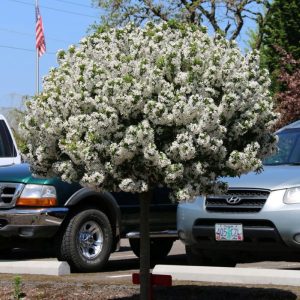
Pink buds opening to white flowers cover the dense rounded head of this top grafted, compact selection; showy and persistent golden fruit in fall that slowly turns orange; makes a spectacular front yard accent; needs full sun and good drainage

Possibly the most popular of all feature trees for the home landscape, with rich burgundy-purple palm-shaped foliage all season long and a very artistic spreading growth habit; put it in the front yard and give it lots of room to grow

True to its name, this variety maintains a somewhat columnar form, with burgindy to red foliage all season long, ending in a fiery display in fall; the dense and narrow upright form makes it wonderfully useful for many garden applications

A picturesque specimen tree featuring gracefully weeping golden branches, stunning when overhanging water; needs plenty of wide open space to achieve its best form; tends to drop branchlets, aggressive root system, so do not plant near homes