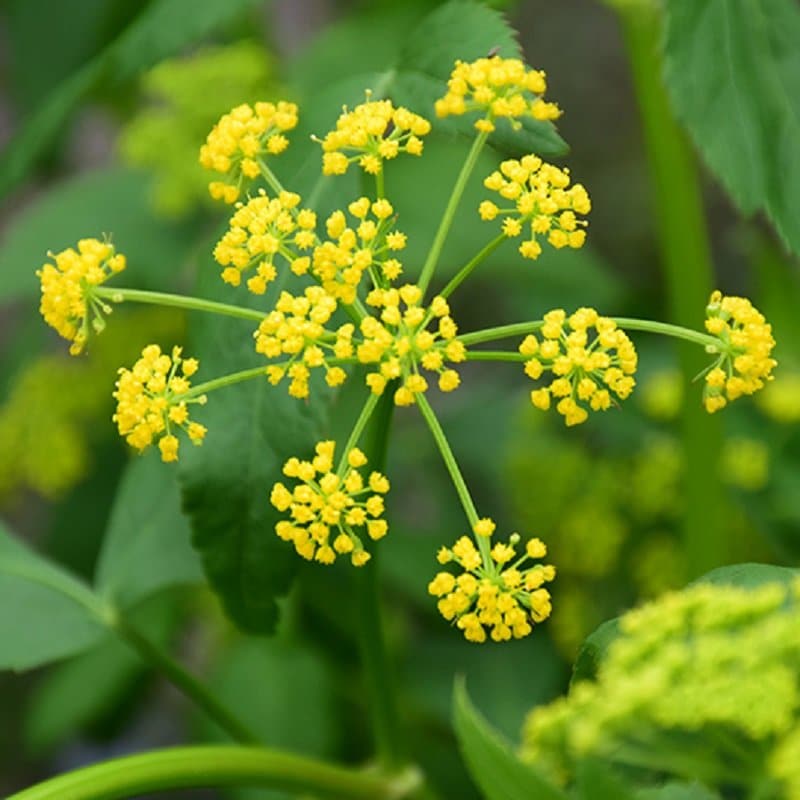
An attractive native perennial, featuring compound umbels of tiny yellow flowers in spring, that are quite showy above the bright green foliage; self seeds, and will naturalize easily; great for open woodlands, prairie areas, or native plant gardens; food source for the Missouri woodland swallowtail butterfly caterpillars
Out of stock
Golden Alexander features showy yellow flat-top flowers held atop the stems in late spring. The flowers are excellent for cutting. Its serrated oval compound leaves remain light green in color throughout the season. The purple fruits are held in clusters from mid to late summer. The brick red stems can be quite attractive.
It is a dense herbaceous perennial with an upright spreading habit of growth. Its medium texture blends into the garden, but can always be balanced by a couple of finer or coarser plants for an effective composition. This is a relatively low maintenance plant, and should be cut back in late fall in preparation for winter. It is a good choice for attracting bees and butterflies to your yard.
| Dimensions | 18 × 36 in |
|---|---|
| Botanical Name | Zizia Aurea |
| Height | 36" |
| Width | 18" |
| Deer Resistance | N |
| Attracts Pollinators | Y |
| Photo Credit | Net PS |

A very showy catmint producing masses of indigo blue flowers from late spring to mid-summer; rosy purple calyxes extend color when blooms are spent; shear after flowering to promote re-blooming

This bold garden perennial features very large and showy mauve-lavender flowers all along the branches, not just the ends; ideal for the mixed garden border or in mass plantings; beware of Japanese Beetles; do not allow to dry to wilting point

Variegated Solomon’s Seal features dainty lightly-scented nodding white bell-shaped flowers along the stems in mid spring. Its attractive pointy leaves remain green in color with showy creamy white variegation throughout the season

Sunny, bright yellow flowers with coppery cones, produced on strong, well branched stems; attracts pollinators and feeds the birds in winter; use in naturalized areas with other native plants