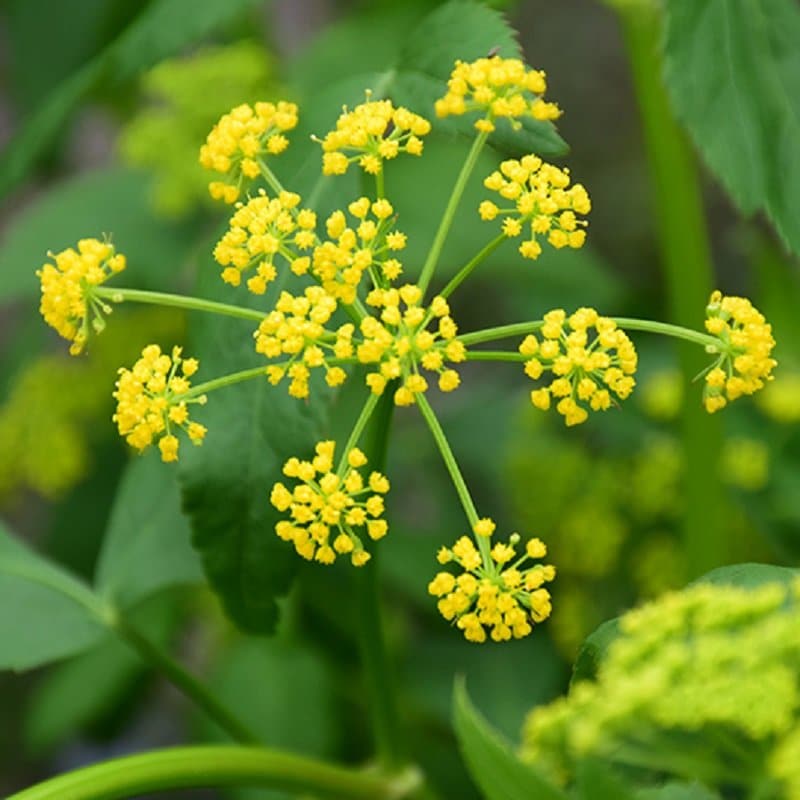
An attractive native perennial, featuring compound umbels of tiny yellow flowers in spring, that are quite showy above the bright green foliage; self seeds, and will naturalize easily; great for open woodlands, prairie areas, or native plant gardens; food source for the Missouri woodland swallowtail butterfly caterpillars
Out of stock
Golden Alexander features showy yellow flat-top flowers held atop the stems in late spring. The flowers are excellent for cutting. Its serrated oval compound leaves remain light green in color throughout the season. The purple fruits are held in clusters from mid to late summer. The brick red stems can be quite attractive.
It is a dense herbaceous perennial with an upright spreading habit of growth. Its medium texture blends into the garden, but can always be balanced by a couple of finer or coarser plants for an effective composition. This is a relatively low maintenance plant, and should be cut back in late fall in preparation for winter. It is a good choice for attracting bees and butterflies to your yard.
| Dimensions | 18 × 36 in |
|---|---|
| Botanical Name | Zizia Aurea |
| Height | 36" |
| Width | 18" |
| Deer Resistance | N |
| Attracts Pollinators | Y |
| Photo Credit | Net PS |

Large, spiny leaves are glossy green; beautiful spikes of violet flowers subtended by spiny purple bracts; interesting form; remains attractive throughout the season

A very showy catmint producing masses of indigo blue flowers from late spring to mid-summer; rosy purple calyxes extend color when blooms are spent; shear after flowering to promote re-blooming

A remarkable variety with eye catching color; strong and bushy habit that is ideal for sunny borders and mixed containers; large and fragrant flowers have striking coral petals with orange tips, surrounding a copper cone; deadhead spent blooms

Attractive variegated foliage and violet flowers; good for bogs or ponds as it requires consistent moisture; blooms emerge from lush, sword-like foliage; hardy and easy to grow; cut back in the fall to reduce pests