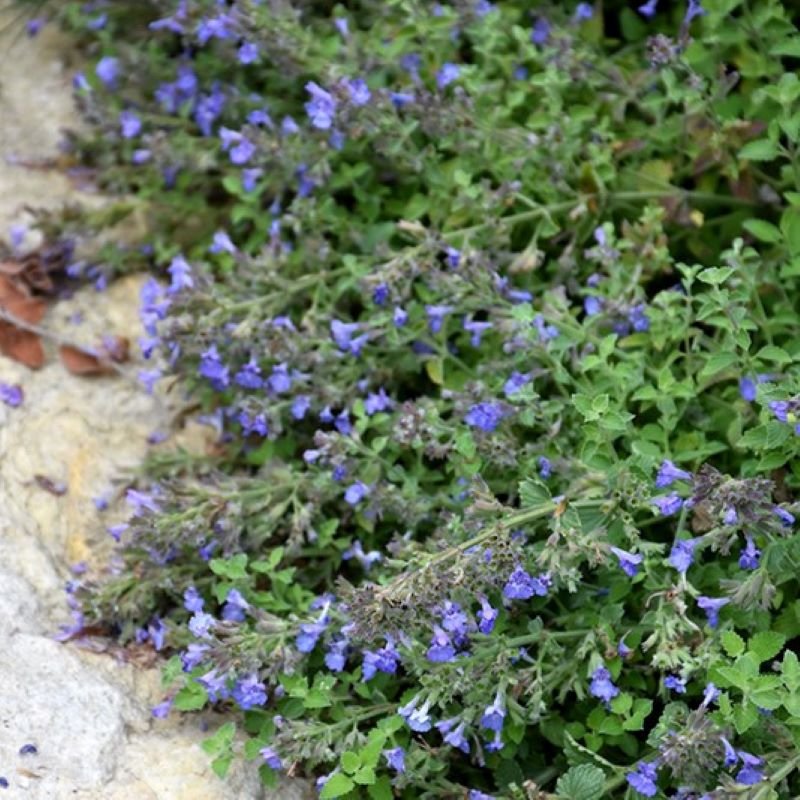
A unique dwarf form that is smaller in scale in every aspect; the grey-green foliage form a wide dense clump that masses well as groundcover in sunny areas or rock gardens
2 in stock
Kit Kat Catmint has masses of beautiful spikes of lightly-scented blue flowers with powder blue overtones rising above the foliage from late spring to early fall, which are most effective when planted in groupings. Its small fragrant pointy leaves remain grayish green in color throughout the season.
It is a dense herbaceous perennial with a mounded form. Its relatively fine texture sets it apart from other garden plants with less refined foliage. This plant will require occasional maintenance and upkeep, and is best cleaned up in early spring before it resumes active growth for the season. It is a good choice for attracting bees and butterflies to your yard, but is not particularly attractive to deer who tend to leave it alone in favor of tastier treats.
| Dimensions | 18 × 12-15 in |
|---|---|
| Botanical Name | Nepeta x faassenii 'Kit Kat' |
| Exposure | Full Sun To Part Sun |
| Water Requirements | Regular Water |
| Height | 12-15" |
| Width | 18" |
| Deer Resistance | Y |
| Attracts Pollinators | Y |
| Photo Credit | NET PS |

Large, scalloped, and extremely glossy leaves are deep purple with dark gray veins; dark stems hold white flowers with rosy-pink calyxes; amazing contrast to other plants; great versatility; keep soil moist in heat of summer

Extraordinary blue-purple spikes of pea-flowers rise from medium green foliage in early summer; use this plant for its outstanding display of vertical flowers as an accent in the garden or borders

Sunny, bright yellow flowers with coppery cones, produced on strong, well branched stems; attracts pollinators and feeds the birds in winter; use in naturalized areas with other native plants

A stunning mounded and drought tolerant variety that features fine, ferny foliage covered in cheerful, yellow flowers; blooms from early to late summer; an excellent addition to beds, borders or containers; thrives in poor, sandy soils