An elegant ornamental tree with leaves that emerge a bright red, then turn green during summer, finishing off with a display of brilliant scarlet-orange fall color; a great accent tree for smaller home landscapes
14 in stock
North Wind Japanese Maple is primarily valued in the landscape for its ornamental upright and spreading habit of growth. It has attractive green deciduous foliage which emerges red in spring. The lobed palmate leaves are highly ornamental and turn outstanding shades of scarlet and orange in the fall.
It is a deciduous tree with an upright spreading habit of growth. Its average texture blends into the landscape, but can be balanced by one or two finer or coarser trees or shrubs for an effective composition. This is a relatively low maintenance tree, and should only be pruned in summer after the leaves have fully developed, as it may ‘bleed’ sap if pruned in late winter or early spring.
| Dimensions | 15 × 20 in |
|---|---|
| Botanical Name | Acer x pseudosieboldianum 'IslNW' |
| Exposure | Full Sun To Part Sun |
| Water Requirements | Regular Water |
| Height | 20' |
| Width | 15' |
| Deer Resistance | N |
| Attracts Pollinators | N |
| Photo Credit | Net PS |

A large and imposing shade tree with an upright spreading habit of growth, best in larger landscapes and parks; extremely tough and adaptable to wet conditions but not tolerant of alkaline soils, rather slow growing; acorns attract squirrels

Amazing crimson fall colour and summer foliage in rich burgundy-red; less dense canopy than other types; fairly sun tolerant; Japanese maples are the most coveted of all small landscape trees, it has almost the perfect shape, habit, and fall colors
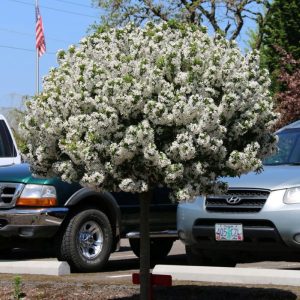
Pink buds opening to white flowers cover the dense rounded head of this top grafted, compact selection; showy and persistent golden fruit in fall that slowly turns orange; makes a spectacular front yard accent; needs full sun and good drainage

A spectacular spring bloomer, with very showy pink to purple flowers held tightly on bare branches in early spring; somewhat coarse heart-shaped leaves; rivals any small ornamental tree for specimen use in the home landscape